Option 1: school in Flanders
Most families choose this. The language is Dutch, so Dutch-speaking children join without a language barrier; for English-speaking children there is extra language support and, in practice, rapid immersion. Flemish education has a good reputation and differs from the Dutch system in a few respects:
- Children start nursery school from two and a half. Education is compulsory from five to eighteen.
- Secondary education lasts six years, with tracks from general to technical and vocational. There is no streaming advice at the end of primary school and no national final exam.
- Schools are a little more formal and set more homework. Wednesday afternoons are free.
- Education is free of charge; a maximum bill applies to materials and outings.
In Sint-Job-in-'t-Goor and the neighbouring municipalities of Schilde, Brasschaat and Schoten, primary and secondary schools are within cycling distance or a short drive.
Option 2: staying at school in the Netherlands
That is possible, and common in the border region. A child who lives in Belgium and goes to school in the Netherlands meets the compulsory education requirement; do notify the Flemish authorities, who check that every child of school age is enrolled somewhere. In practice the journey decides. From Noorderkempen station in Brecht a direct train runs to Breda; by car Breda is approx. 25 min away. For older children who want to finish secondary school it is a realistic option, for young children less so.
Option 3: an international school
The Antwerp region has international schools, with English-language teaching and international diplomas. That is mainly of interest to families who move more often, or to children already in an international programme.
After secondary school
A Flemish secondary diploma gives access to Dutch universities, and vice versa. Antwerp, Leuven and Ghent have universities within easy reach; tuition fees are lower in Flanders than in the Netherlands.
Room for a family
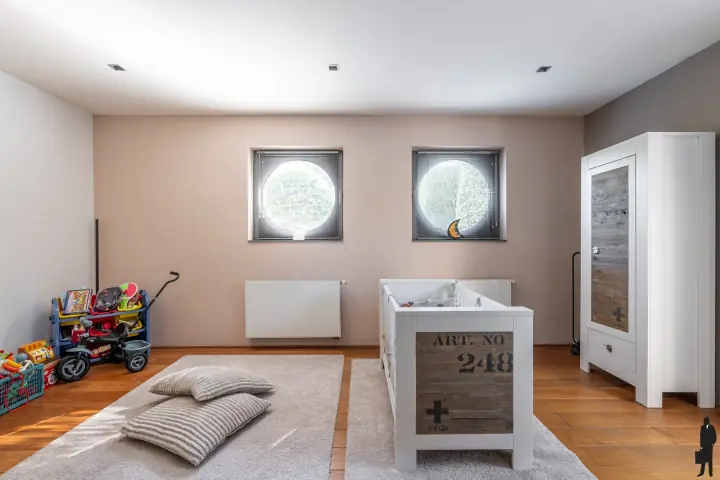
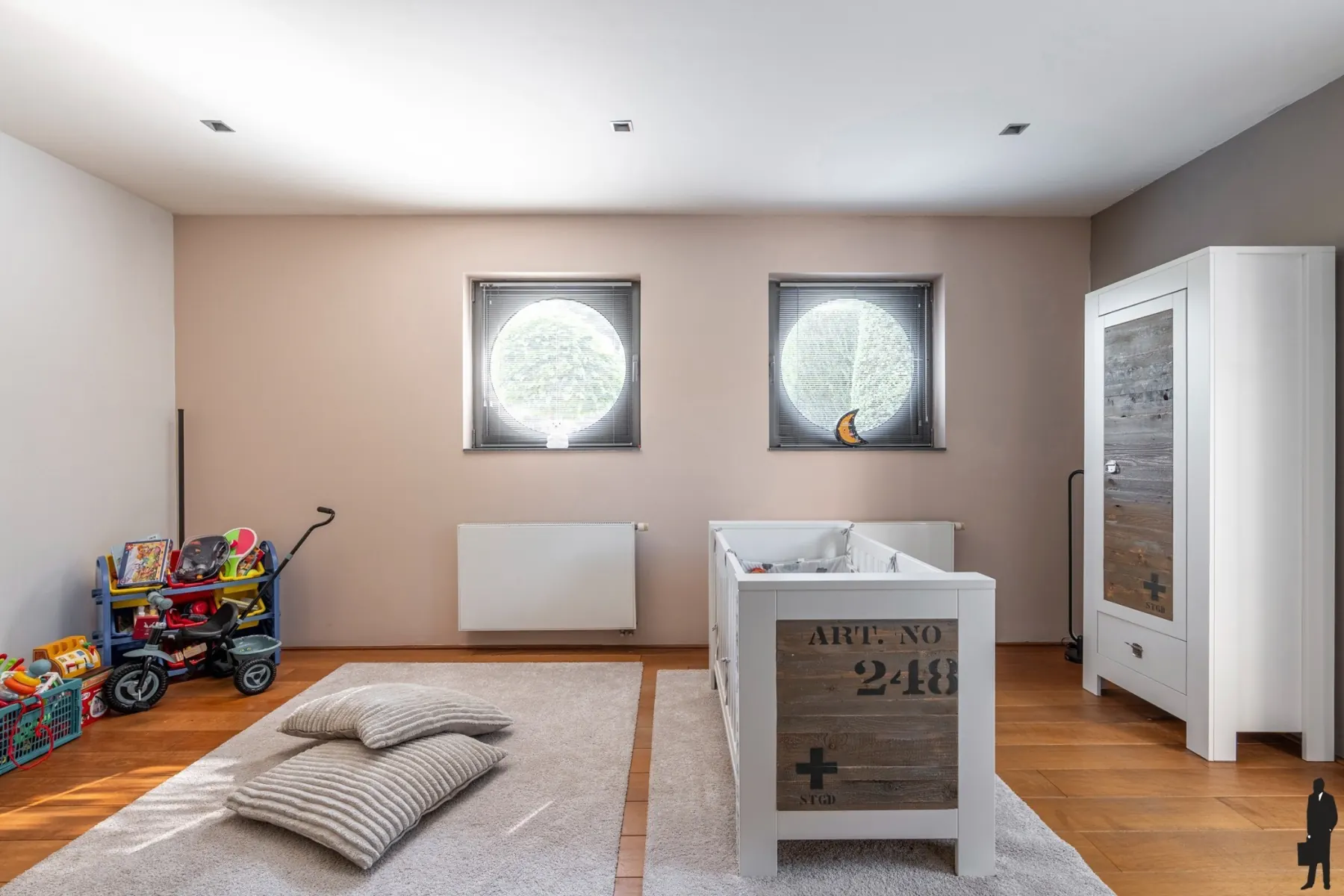
Villa Grandeur has five bedrooms spread across the levels, so every child has a place of their own. The floor plans show how it fits together. Everything else you need to arrange is in the checklist.
Reference date: September 2026. This is general information, not personal advice. Rates and conditions change; have your situation checked by your notary or adviser.