What do the purchase costs consist of?
On top of the purchase price you pay three kinds of costs in Flanders: the registration duties (officially the sale duty, verkooprecht), the notary's fee and deed costs, and, if you borrow, the costs of the mortgage deed. The registration duties are by far the largest item.
The sale duty: two rates
| Situation | Rate |
|---|---|
| Sole owner-occupied home: you buy as a private individual, will live there yourself and own no other home (or sell it in time) | 2% |
| All other purchases, such as a second home or a purchase through a company | 12% |
Conditions apply to the reduced rate. The main ones: you buy the full ownership as a natural person, you move your main residence to the home within the statutory period, and at that moment you own no other home. If you still have a house in the Netherlands, it counts. The scheme provides a period in which to sell that home. Your notary assesses in advance whether you meet the conditions.
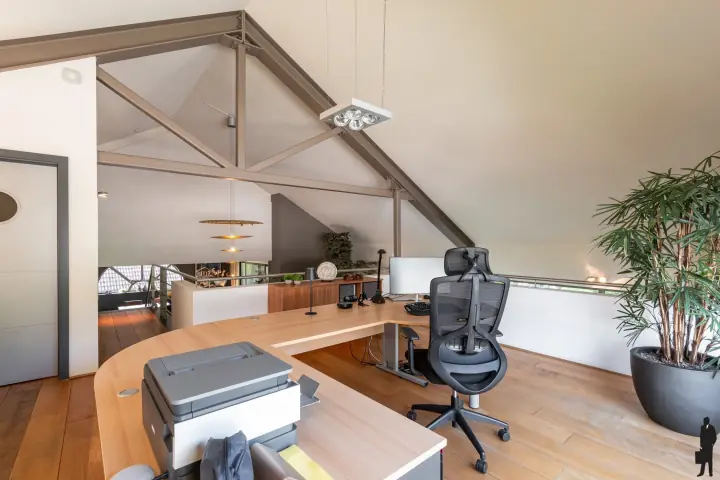
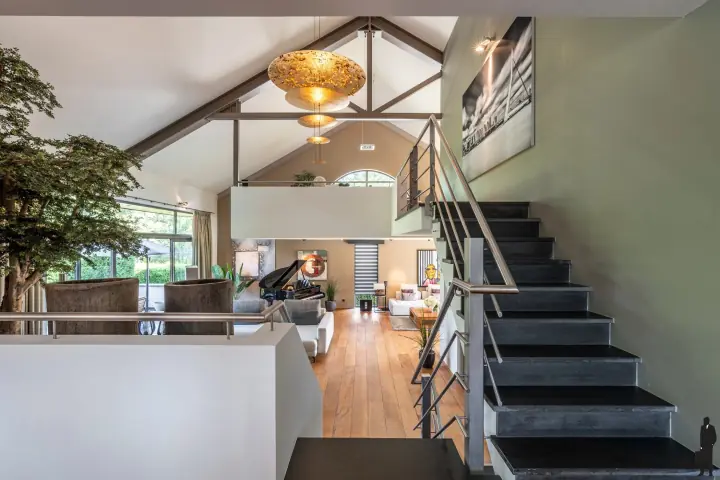
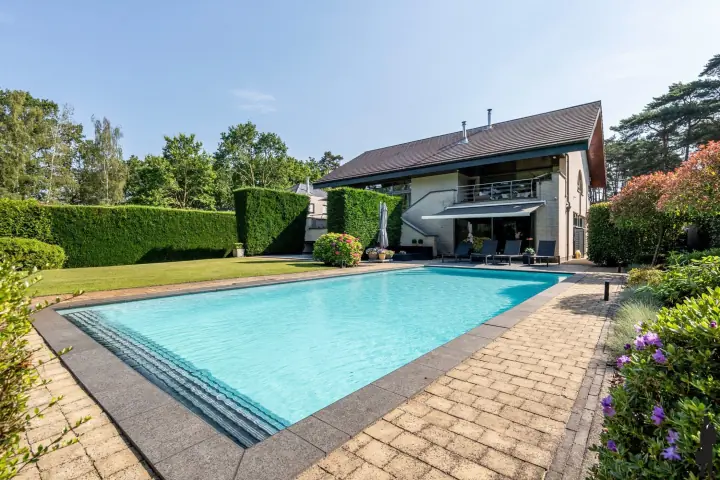
Worked example on the asking price of Villa Grandeur
| On a purchase price of €1,095,000 | Sale duty |
|---|---|
| Sole owner-occupied home (2%) | €21,900 |
| Standard rate (12%) | €131,400 |
| Difference | €109,500 |
On this amount the difference between the two rates is well over a hundred thousand euros. For anyone making the villa their main residence it is therefore well worth going through the conditions for the reduced rate with the notary at an early stage, certainly if a home in the Netherlands still has to be sold.
Notary costs
The notary's fee is set by law in Belgium and rises with the purchase price. Administrative costs and VAT are added. The notary provides a detailed statement in advance. Buyer and seller may each choose their own notary; the notaries then share the fee, at no extra cost to you.
Costs of the loan
If you borrow with a mortgage registration, a second deed is added: the mortgage deed. On it you pay registration and mortgage duties on the registered amount, plus the notary's fee. These costs are noticeably higher in Belgium than in the Netherlands. Ask your bank or notary for a calculation on your loan amount.
And afterwards: annual costs
As an owner you pay an annual property tax (onroerende voorheffing), calculated on the cadastral income of the home. The cadastral income of Villa Grandeur is €2,585 (not indexed). The municipality and the province add surcharges to this; your notary or the agent can give you the current annual amount.
Comparison with the Netherlands
In the Netherlands an owner-occupier pays 2% transfer tax. With the Flemish rate of 2% for the sole owner-occupied home, that difference has disappeared. What does differ are the notary and loan costs, which are higher in Belgium. Against that stands the lower price per square metre, so that on balance you buy more house.
Reference date: September 2026. This is general information, not personal advice. Rates and conditions change; have your situation checked by your notary or adviser.